
Sleep Pressure and Adenosine: The Build-Up to Bed
What is sleep pressure?
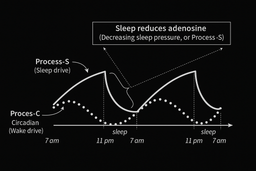
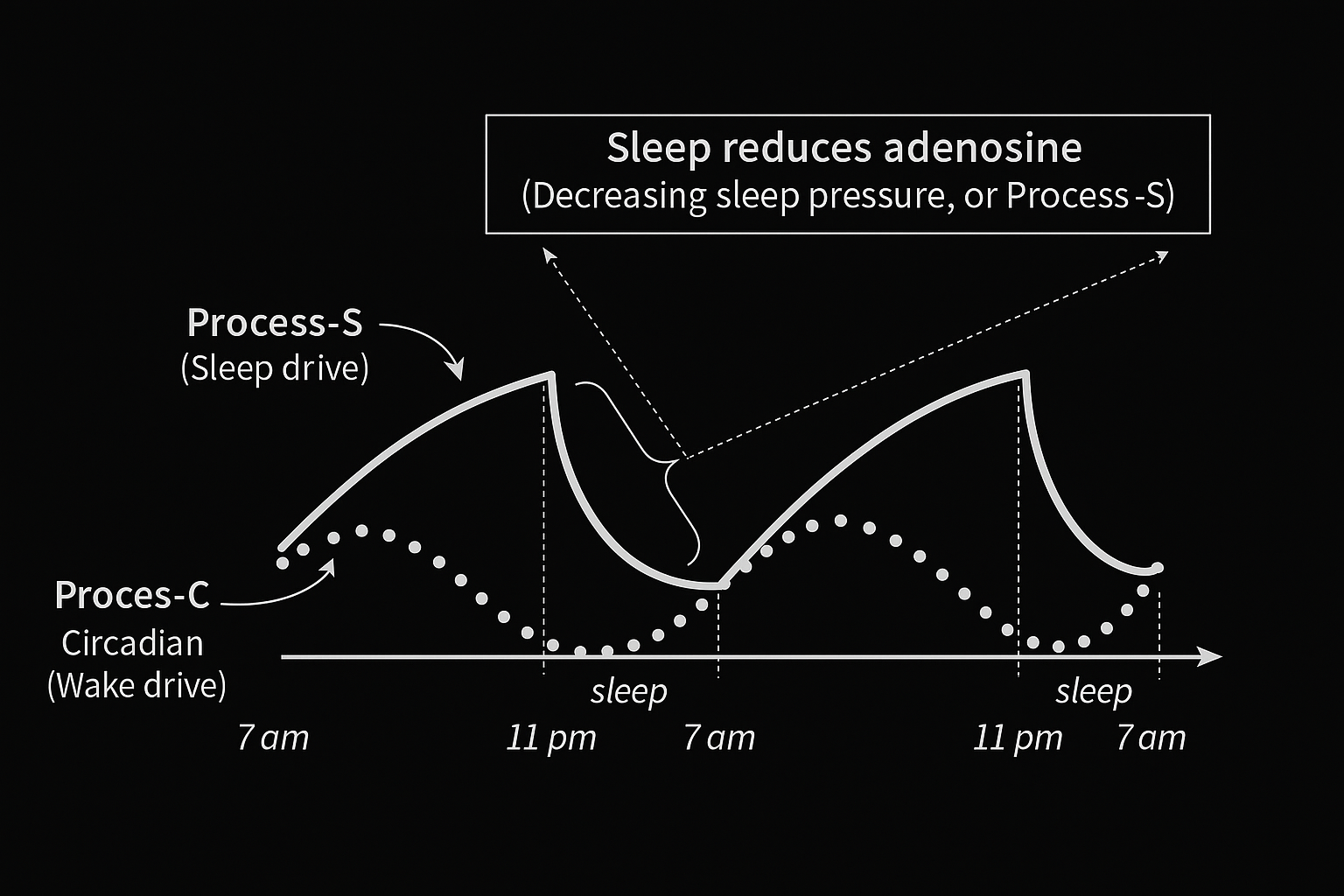
Sleep pressure is the steadily rising urge to sleep that builds the longer you are awake. Biologists call it Process S. It is separate from, but synchronized with, your circadian clock (Process C), which times when sleep should happen. You feel most naturally sleepy when high sleep pressure meets the circadian low point late at night.
Adenosine: the molecular meter of wake time
Every thought and movement burns ATP, the brain’s main energy molecule. As ATP is used, adenosine accumulates outside neurons. Adenosine binds to receptors (mainly A1 and A2A) and dampens neural activity, creating that heavy-eyed, head-nodding feeling. The longer you are awake, the more adenosine piles up, and the stronger the biological push toward sleep.
Clearing the slate during deep sleep
Slow wave sleep (deep non-REM) is when adenosine levels drop fastest. Enzymes like adenosine deaminase and cellular housekeeping processes help metabolize and shuttle it away. The intensity of your slow waves often reflects how high your sleep pressure was: bigger pressure, deeper slow waves, stronger rebound. Cut sleep short and you leave adenosine on the table, so pressure stays high the next day.
Caffeine: a clever impostor


Caffeine does not remove adenosine. It simply sits on adenosine receptors and blocks the signal. Once caffeine wears off, the accumulated adenosine can hit you hard. Timing matters: a late afternoon espresso can push your perceived sleepiness back hours. If you rely on caffeine daily, consider a cutoff time and occasional resets so your receptors regain sensitivity.
Naps: relief valve or rhythm wrecker?
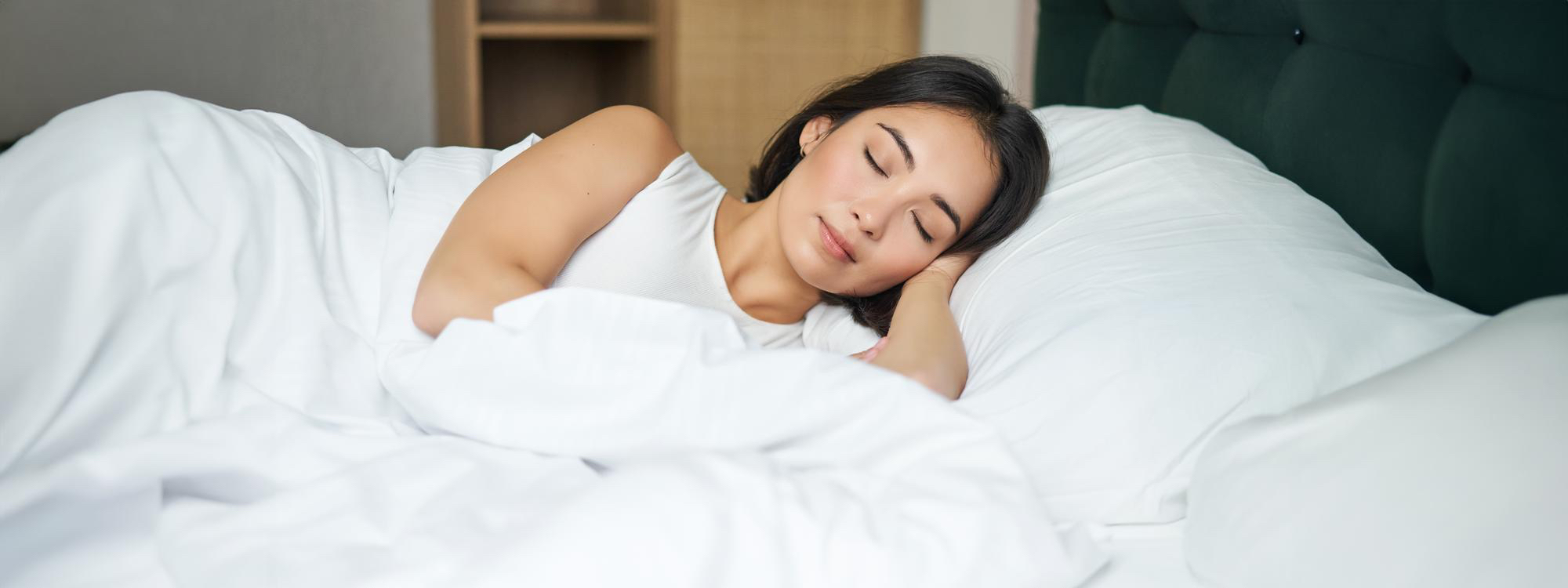
A short nap (10 to 20 minutes) can lower adenosine just enough to boost alertness without stealing much from nighttime sleep. Longer naps that enter deep sleep can slash sleep pressure too much, making it harder to fall asleep later. Use naps strategically: earlier in the day and short when you need a quick reset.
Activity, metabolism, and adenosine build-up


More neuronal firing means more ATP use and more adenosine. Intense mental or physical days can raise sleep pressure faster. That is one reason vigorous exercise or heavy study sessions often make you crave sleep. Conversely, passive days may leave you wired but not tired: low pressure meets a late clock, and you lie awake. Match effort with recovery.
Two-process teamwork: pressure meets clock
Your circadian system (driven by the SCN and melatonin signaling) tells you when to sleep; adenosine tells you how badly you need it. Misalign them and problems start. Think of staying up late on weekends: pressure is low after sleeping in, but the clock is still late, so bedtime drifts. Align both by waking at a consistent time and letting pressure rebuild across the day.
Practical takeaways
Keep a consistent wake time so sleep pressure resets predictably. Limit caffeine after the early afternoon to let adenosine do its job. Use brief naps wisely. Protect deep sleep by giving yourself enough total sleep time. When nights are cut short, expect higher pressure and plan an earlier bedtime rather than just powering through.
Next up
Stimulants, alcohol, and late meals can all tug on your sleep architecture. Learn how these inputs shift your stages and timing.
How Alcohol, Caffeine, and Late Meals Shift Stages